
Fields marked with an * are required
"*" indicates required fields
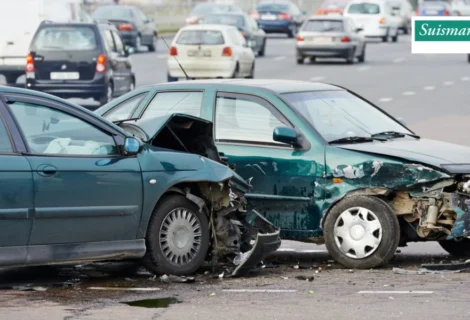
T-bone accidents are some of the most dangerous vehicle accidents anyone can experience. This type of crash involves one vehicle striking another vehicle directly in the side, and the occupants of the struck vehicle are likely to suffer severe injuries. In a T-bone accident, fault…

Car accidents are one of the most common causes of accidental injuries and deaths in Connecticut each year. If another driver crashes into you, it’s vital to know what to do after a car accident and how you can hold them accountable for your damages.…
A personal injury can be life-changing for the victim, but it can also have devastating effects on their partner. If your spouse was recently injured by another party’s negligence, you likely have grounds to file a personal injury claim to recover their damages, but you…

Every driver has a responsibility to operate their vehicle attentively, but distracted driving is a commonly cited cause of accidents throughout Connecticut each year. While it’s vital to know what you can do after a distracted driver has injured you in an accident, every driver…

When you have been injured by another party’s negligence or misconduct in Connecticut, you likely have grounds to file a personal injury claim against whoever injured you. Success with your case could yield compensation for your economic losses as well as your pain and suffering.…

The unexpected death of a family member is an extremely difficult experience, and if their death was caused by another party’s negligence, you likely have grounds to file a wrongful death lawsuit. This is similar to a personal injury case with a few key differences,…

Diagnostic errors are one of the most commonly cited medical errors in Connecticut and throughout the United States, but can you sue for misdiagnosis? The answer is yes, but only if you can prove that the misdiagnosis was the result of negligence and caused actual…
The goal of a personal injury case in Connecticut is for the injured plaintiff to hold a defendant accountable for the damages the defendant caused. In most cases, this means claiming economic and non-economic damages from the defendant, but in some cases, a plaintiff could…
When you get a divorce in Connecticut, you may need different documents depending on whether the case is contested, whether the spouses have minor children, and whether the parties are asking the court to issue orders regarding other matters in addition to the divorce. Knowing…

Knowing how to file for divorce in Connecticut involves more than mere paperwork. One must first determine that residency and grounds requirements are satisfied and then complete and file the appropriate court forms. In Connecticut, what we commonly call divorce is legally referred to as…

In the event of a divorce, each spouse typically hires their own attorney to help them navigate the legal side of things. However, sometimes one or both spouses may wonder who pays the attorney fees in a Connecticut divorce. Each spouse initially pays their own…
Property division is an important part of any divorce. However, confusion can happen when it comes to inherited property, leaving many wondering, “Is inheritance divided in a Connecticut divorce?” In Connecticut, there isn’t a straightforward, absolute rule dictating that inherited assets always stay solely with…

When couples go through divorce, one of the issues that they wish to work out is alimony. Alimony is the payment of one spouse to another to help fulfill their financial needs, but how is alimony calculated in Connecticut? Connecticut alimony laws provide a list…

Some divorced couples wonder if there are alternatives to typical litigation to finalize their divorce. In some cases, an online divorce may be a viable option. Online divorce in Connecticut might be appropriate for spouses with relatively straightforward circumstances and sufficient cooperation to agree on…

© 2026 Suisman Shapiro Attorneys-at-Law. All rights reserved.
Digital Marketing By: 
*Images are obtained under license from Canva and other third-party stock image providers, with attribution included where required.