
Fields marked with an * are required
"*" indicates required fields
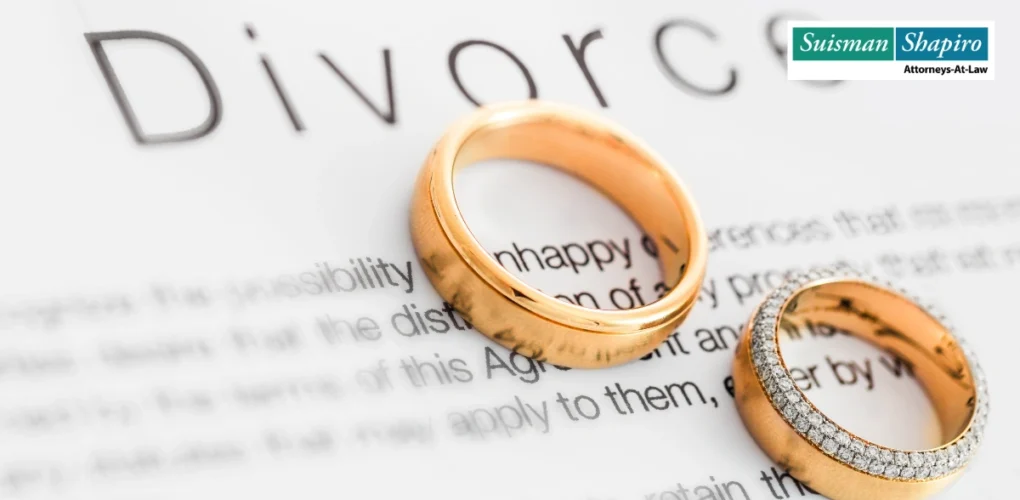
When filing for divorce, couples may wonder, “Is Connecticut a no-fault divorce state?” Connecticut is unique in that it allows for both fault and no-fault reasons for divorce. This means that spouses have the option to either place fault on the other spouse or to simply state that the cause of divorce is an irretrievable breakdown of the marriage, faulting neither spouse. Spouses may benefit from understanding the difference to know how to approach their case.
A no-fault divorce allows a spouse to seek dissolution without the need to prove that the other spouse committed a specific act that caused the marriage to fail. The main reason for a no-fault divorce in Connecticut is irretrievable breakdown.
A marriage has irretrievably broken down when the relationship has reached a point beyond realistic repair. Proving responsibility for the separation isn’t a requirement for either spouse.
Additionally, Connecticut offers a no-fault option if spouses have separated due to incompatibility for a minimum of 18 months straight prior to the complaint being filed, with no realistic hope of getting back together. Likewise, this second legal reason doesn’t necessitate proving typical fault in a marriage.
No-fault divorce therefore can allow spouses to focus on the issues the end of the marriage created, rather than litigating all of the reasons that the relationship failed.
A fault-based divorce requires a spouse to establish one of the specific causes of breakdown listed in Connecticut divorce laws in Connecticut General Statutes § 46b-40. The statute includes several fault-based grounds, such as:
A spouse choosing a fault-based ground must establish facts that support the particular legal claim. The divorce rate in Connecticut is 2.6 per 1,000 residents, according to the Centers for Disease Control and Prevention. According to Census Reporter, 12% of women and 9% of men are divorced in Connecticut, with these individuals having the option to file for a fault or no-fault divorce.
Whether you should choose a fault or no-fault divorce is based on the circumstances surrounding your case. When the marriage has genuinely reached its end, and there’s no real advantage in arguing over why, a no-fault divorce citing irretrievable breakdown might be the most beneficial path.
A fault-based ground can become relevant when the facts supporting that ground also have legal significance for the broader divorce case. For instance, if you are requesting a greater percentage in property division because your spouse spent significant funds on an affair, it may be beneficial to claim adultery in your divorce claim.
Spouses also should understand that choosing a fault-based ground does not guarantee a more favorable financial outcome. The court still must apply the relevant legal statutes, regardless of who was at fault.
When individuals have decided to end their marriage, it is highly beneficial to hire a divorce lawyer to advocate for your needs and future. A Connecticut divorce lawyer can evaluate the facts of a marriage and identify which statutory grounds may apply. Additionally, legal counsel can clarify the proof needed for a fault-based claim and evaluate if pursuing such grounds would likely influence financial arrangements or child custody in the divorce.
A divorce attorney can look at the evidence and represent you in legal proceedings. Counsel can also help a spouse seek an irretrievable breakdown divorce when it is more appropriate to avoid unnecessary litigation over the details of marital fault.
The Connecticut family lawyers at Suisman Shapiro Attorneys-at-Law work with Connecticut residents on the legal and financial issues that result from the end of marriages. The firm has Eastern Connecticut roots going back more than 80 years, and its attorneys now concentrate in specific practice areas to address the complexity of modern legal issues.
For clients in New London and surrounding communities, the firm’s office provides access to counsel familiar with Connecticut family law and the procedures used in local courts. Connecticut divorce cases are heard in the Superior Court’s family division. For residents of southeastern Connecticut, divorce and related matters may proceed through the New London Judicial District at 70 Huntington Street, New London, CT 06320.
One spouse usually cannot stop the other spouse from eventually getting divorced simply by refusing to agree to the divorce. Irretrievable breakdown is one of the grounds for dissolution in Connecticut, so the spouses do not need to both agree that the marriage is at an end. The divorce case, however, could become more complex if the spouses do not agree to the divorce and need a court to resolve contested issues.
Yes, adultery can affect alimony in Connecticut. Courts have the right to look at all the facts of the divorce to make an informed determination. However, proving adultery, by itself, does not entitle a spouse to receive alimony or avoid paying alimony. The court looks to several statutory factors to determine whether alimony is appropriate, and for how long and how much.
Yes, Connecticut recognizes legal separation. A legal separation, however, does not terminate the marriage. The parties remain legally married to each other but live separate lives under the terms of a court order. A legal separation orders the parties to resolve many of the same issues as a divorce, such as property division, but without immediately dissolving the marriage.
Yes, spouses can reconcile after filing for divorce. The parties can decide to remain married and deal with the pending case through appropriate motions in court. Because a pending divorce proceeding has legal and financial implications, the spouses should understand what, if anything, happens to the pending divorce if they decide to stop participating in the case.
Suisman Shapiro Attorneys-at-Law has been representing clients going through divorce for years. We can help you in your case as well. Contact our office today to discuss your case with a local attorney.

© 2026 Suisman Shapiro Attorneys-at-Law. All rights reserved.
Digital Marketing By: 
*Images are obtained under license from Canva and other third-party stock image providers, with attribution included where required.