
Fields marked with an * are required
"*" indicates required fields
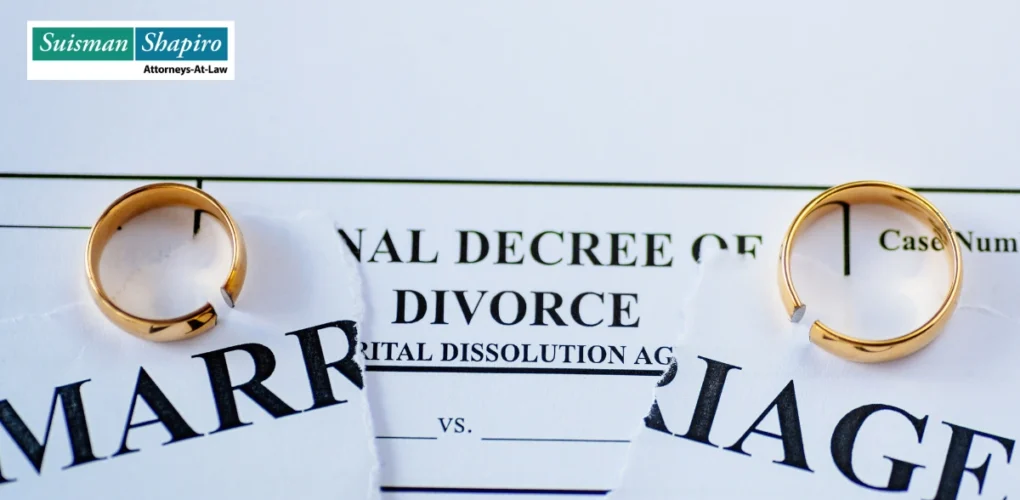
Property division is an important part of any divorce. However, confusion can happen when it comes to inherited property, leaving many wondering, “Is inheritance divided in a Connecticut divorce?” In Connecticut, there isn’t a straightforward, absolute rule dictating that inherited assets always stay solely with the recipient spouse. However, many factors are to be considered when determining if it should be divided.
Connecticut law has a more expansive approach to property division in divorce cases. Instead of a system that views property as either marital or separate based on how and when it was acquired, Connecticut law gives the court discretion to consider each party’s estate when entering a divorce.
Divorce laws, such as Connecticut General Statutes § 46b-81, empower the Superior Court to award either spouse all or part of the other’s estate, and further mandate that the court weigh several factors when determining property division.
As a result, the fact that one spouse receives an inheritance during the marriage is not the last word on whether the inherited property may be considered in the divorce. According to the Centers for Disease Control and Prevention, the divorce rate in Connecticut is 2.6 per 1,000 residents.
Connecticut does not have a rule that requires the court to split every inheritance down the middle in a divorce. However, a Connecticut court can consider both the circumstances surrounding the property and the larger financial circumstances of both spouses.
For example, an inheritance left in a separate account in the recipient spouse’s name may raise different issues than an inheritance that was deposited in a joint account and then used to purchase the marital residence.
When deciding on a fair division, the judge also looks at how much the inherited asset is worth and what each spouse’s financial situation is. Equitable distribution does not necessarily mean that every asset may be divided equally. The court can decide what property assignment is appropriate after reviewing the statutory factors.
While keeping inherited property distinct makes its lineage simpler to prove, it doesn’t mean it’s automatically off the table for division. The inheritance must still abide by property division laws. However, it is still helpful to keep records of the inheritance, such as:
These can be helpful in establishing where inherited funds came from and how the money was treated after receipt. Commingling can make the financial history more difficult to trace. For example, if an individual deposits inherited funds in a joint account and then uses that account for household bills, this can raise questions about how the property should be handled in a divorce.
An inheritance can become more complicated when inherited money is used to acquire or improve property that is used by or owned by both spouses.
For instance, if one spouse received an inheritance of $100,000 and used it toward the purchase of a marital home, this may raise questions in a divorce. Even if the inheritance can still be tracked, the court may look at the house, how much was put toward buying it, and each spouse’s financial situation when deciding how to split the property.
When inheritance is a factor in divorce property division, a divorce lawyer can trace the path of inherited funds, review financial documents, and determine how any inherited assets impact the overall distribution of property. An attorney can also help determine whether an inherited asset has been commingled with marital funds or used to purchase property held jointly by the parties.
When inheritances involve large investment accounts, a Connecticut divorce attorney can help analyze the property and address any issues it may raise. When it comes to settling or litigating the division of property, a lawyer can introduce evidence pertaining to an inheritance.
The Connecticut family law attorneys at Suisman Shapiro Attorneys-at-Law have advocated for individuals, families, and businesses in eastern Connecticut for over 80 years. Founded by Charles Suisman, Max Shapiro, and Louis Wool over eight decades ago, the firm has expanded to become the largest law firm with headquarters in eastern Connecticut.
The firm’s New London office serves clients in eastern Connecticut, where our lawyers are familiar with the family law issues that arise in that area. Should your case require courtroom litigation, it may be heard at the New London Judicial District and courthouse at 70 Huntington Street, New London, CT 06320.
Inheritance received before marriage could still play a role in a Connecticut divorce. Connecticut property-division law allows courts to take into account the estates of the spouses when dividing property.
A court has the power to consider the value and circumstances of inherited property rather than an automatic rule of separate property. Maintain documentation about the origin and ownership of inherited property to show its history during a divorce.
A spouse is generally required to provide financial information related to the divorce, which may include assets affecting property division or support. Even if the spouse receiving it thinks an inheritance is separate property, it still needs to be included in financial disclosures.
Failure to disclose relevant financial information can create issues during negotiations or litigation and may impact the court’s ability to make informed decisions regarding property and financial orders.
Inherited jewelry can be considered by Connecticut courts when evaluating the estates of the spouses. Sentimental value does not necessarily impact the legal treatment of the jewelry.
The court may consider the financial value and the circumstances under which it was inherited. Documentation can help establish when the jewelry was received and its approximate value.
A spouse can generally receive an inheritance while a divorce case is pending, but it may become relevant to the financial proceedings. Connecticut courts can take into account each spouse’s estate when determining property and support orders. Because financial circumstances can change during litigation, a significant inheritance may need to be disclosed and could impact negotiations or the court’s ultimate decisions.
If you have an inheritance and are wondering how this can affect your divorce case, Suisman Shapiro Attorneys-at-Law can help you. Contact us today to begin moving forward.

© 2026 Suisman Shapiro Attorneys-at-Law. All rights reserved.
Digital Marketing By: 
*Images are obtained under license from Canva and other third-party stock image providers, with attribution included where required.