
Fields marked with an * are required
"*" indicates required fields
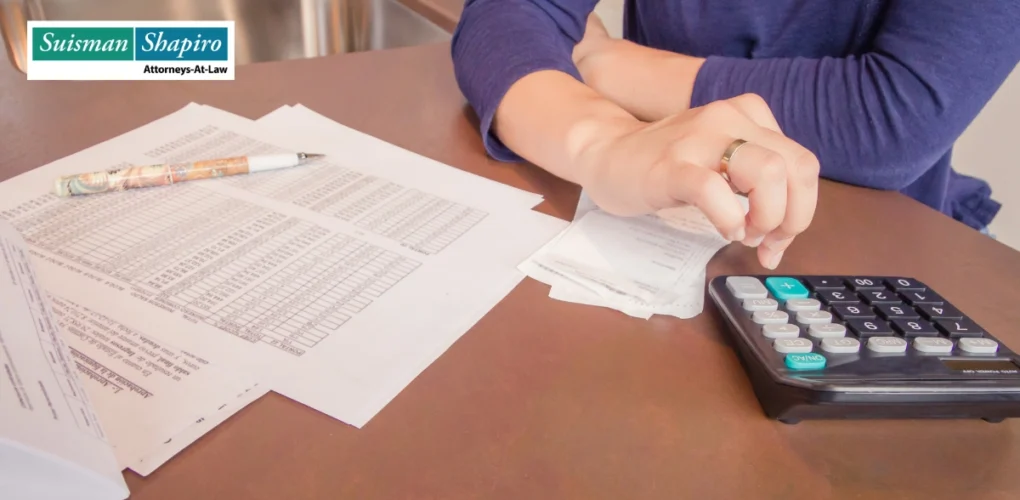
When a couple is going through a divorce, they may worry about a number of things, including the future of their children and finances. When it comes to finances, many may wonder how debt is divided in a Connecticut divorce. Connecticut courts have wide discretion to dispose of property and financial obligations when dissolving a marriage.
Connecticut is an equitable distribution state with respect to marital property. While community-property states generally mandate an equal division of marital assets and debts, Connecticut judges are empowered to determine an equitable distribution considering all the relevant facts.
Under state property and debt division laws, the court can assign property owned by either spouse. Because Connecticut courts employ an “all-property” equitable distribution model, their review isn’t confined to assets obtained just within the marriage. Rather, the judge can take into account the type and worth of the marital estate as a component of a wider evaluation for their financial decisions.
One reason debt is considered with assets is that allocating a particular asset without the debt associated with it may not present a fair picture of the parties’ finances. For example, the spouse who receives a house could also be responsible for a mortgage or other liability that would be paid from the home.
As of the fourth quarter of 2025, mortgage debt made up over 70% of household debt in Connecticut. In the third quarter, outstanding residential mortgage debt was estimated to be $153.4 billion. Determining who is going to continue to be liable for the mortgage in a divorcing couple’s house might consequently be one of the most important financial concerns in the case.
Furthermore, in 2023, the average credit card debt balance for Connecticut families was roughly $9,900, while the median credit card debtor owed $5,000. When assessing who is responsible for unpaid debts after a divorce, it can be essential to determine how and when credit card balances were accrued.
In addition to assets, a court can consider the debts tied to the parties’ finances when making its orders. Common debts accrued in a marriage include:
The categorization of a debt is not always the deciding factor in the court’s proceedings. A credit card in a spouse’s name may still be part of the overall debt analysis when dividing finances, and a jointly titled debt may be assigned to one spouse under a divorce judgment.
A court can make orders assigning responsibility for particular debts. The spouses can also negotiate a division of debts as part of a settlement agreement. The agreement may include provisions for payment responsibilities and should be in writing. Connecticut courts review agreements before entering them as part of the final judgment, and the agreement must meet certain requirements.
It’s crucial to differentiate between what spouses owe each other as per the divorce decree and what they owe to outside creditors. When both spouses signed a mortgage, credit card agreement, or loan, the divorce decree assigning the debt to one spouse may not bind the creditor, and the creditor may still have rights under the original contract.
The other spouse may still be legally responsible for payment. The spouse to whom the debt was assigned could have an obligation to reimburse or indemnify that spouse if the creditor attempts to collect from them.
If you have debt in your divorce, hire a divorce lawyer right away to begin helping you advocate for your financial future. A skilled Connecticut divorce attorney can sort through and classify debts, scrutinize financial statements and loan agreements, and figure out the impact of existing liabilities on the final financial resolution. A lawyer can explain Connecticut divorce laws to you and help you understand how they apply to your case.
For couples in southeastern Connecticut, debt-related divorce matters may be handled through the New London Judicial District, including the courthouse at 70 Huntington Street, New London, CT 06320.
For over 80 years, Suisman Shapiro Attorneys-at-Law has represented people and families throughout eastern Connecticut. Divorce, legal separation, custody, and property division cases, including financial concerns that might require a thorough examination of assets, obligations, and income, are handled by our Connecticut family law attorneys.
Yes, a spouse can be affected by a debt that they did not personally incur, under the right circumstances and depending on financial orders in the divorce judgment. That said, a divorce judgment doesn’t impact your actual legal responsibility to the creditor, meaning the account agreement, governing law, and court mandates stand on their own. Undisclosed debt can also be a source of conflict when the marital estate is being calculated.
Yes. Debt can affect the overall financial value of property awarded to either spouse. A home with substantial mortgage debt, for example, has a different net value than a home without mortgage liability. Connecticut courts can also consider the parties’ financial circumstances when making property assignments. The court might therefore look at assets and their associated debts as a whole, instead of considering each financial burden separately.
A spouse’s unilateral debt can be a contested issue in divorce, especially when the other spouse believes that the debt should not factor into their financial settlement.
Information concerning when the debt was incurred, how the money was used, and whether the debt benefited the household can help to establish the circumstances of the debt. The court can use those facts when deciding on equitable financial orders, but creditor liability remains a separate issue.
A divorce judgment generally cannot, by itself, rewrite the terms of a creditor’s contract. When both spouses remain legally obligated under a joint loan or credit agreement, the creditor may continue to pursue either borrower for payment even if the divorce judgment says that one spouse is responsible for paying the debt. Removing a spouse from a contractual debt might involve refinancing, clearing the balance, or securing an official release from the creditor.
Suisman Shapiro Attorneys-at-Law has been handling divorce cases for years and can help you with yours too. Contact us today to begin speaking with a lawyer.

© 2026 Suisman Shapiro Attorneys-at-Law. All rights reserved.
Digital Marketing By: 
*Images are obtained under license from Canva and other third-party stock image providers, with attribution included where required.