
Fields marked with an * are required
"*" indicates required fields
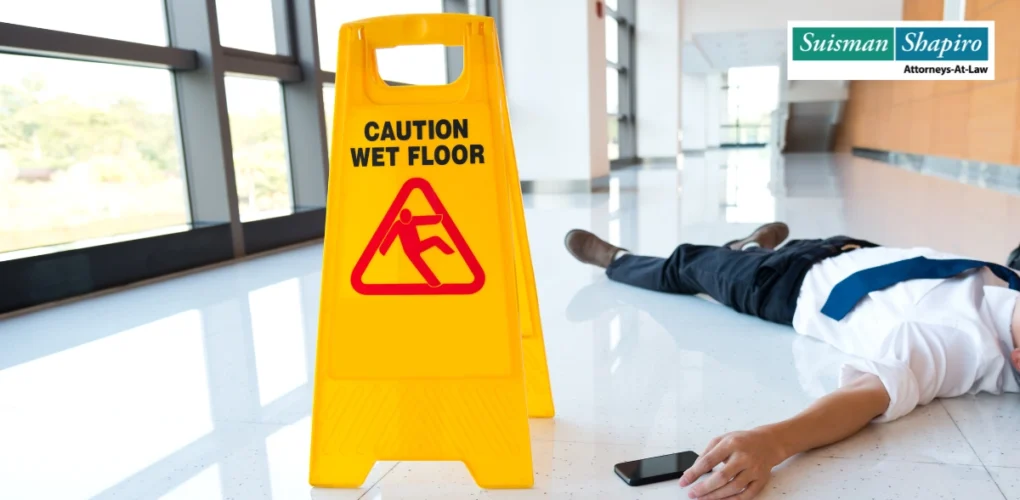
When you enter the property of another party and suffer injuries due to a dangerous condition on that property, the property owner may be held liable for compensation, but exactly what makes a property owner liable for injuries in Connecticut?
At Suisman Shapiro Attorneys-At-Law, our experienced, skilled Connecticut personal injury attorneys are here to answer that question and help you and your loved ones, from Hartford to New London to Groton, recover the compensation and justice you deserve.
Slip-and-fall accidents are one of the leading causes of injury in the United States. In fact, in 2024, 35% of all nonfatal preventable injuries were related to falls, and the United States sees a total of three million emergency room visits each year for fall-related injuries.
Premises liability is the area of law under which slip-and-fall accidents are covered, but premises liability also comes into play in a number of other accidents that can happen on someone’s property. Other premises liability accidents include dog bites or animal attacks, swimming pool accidents, and incidents caused by negligent or inadequate security measures.
In Connecticut, owners of property have a legal duty to maintain safe conditions for all visitors who are legally on their property. If someone is injured because of a dangerous condition that the property owner should have reasonably been aware of and addressed, then the owner can be held liable for any ensuing damages. All property owners in the state are required to take the following actions:
However, there are several other conditions that must be met in order for the property owner to be considered liable.
In order for a property owner to be held liable for an injury, the first condition that must be met is the legal status of the visitor. In Connecticut, a property owner’s duty or responsibility is dependent on the status of the individual who has entered their property. These visitors are separated into three different classifications, including:
Based on the status of the visitor, a property owner can be held liable for any injuries if the following conditions are met.
For a property owner to be held liable, there must be a dangerous condition on their property. These conditions typically include:
Liability will often be based on whether the property owner was aware, or had actual or constructive knowledge, of the hazard on their property. Actual knowledge means that the owner was aware of the hazard, whereas constructive knowledge means that the hazard existed long enough that the owner should have been aware of it.
Once the owner is aware of the hazard, they have the duty to fix the issue or warn lawful visitors. Failing to take this necessary step can result in injury and liability. One example might be not placing a “wet floor” sign on a recently mopped area of a grocery store.
Finally, it must be proven that the dangerous condition was the direct cause of the victim’s injuries.
In Connecticut, the most common locations for premises liability accidents can include any kind of retail store, grocery store, restaurant or bar, coffee shop, apartment complexes, office buildings, or parking lots and sidewalks. Based on the location and cause of your accident, there are various parties who may be held liable, not just the property owner themselves.
There are a variety of forms of evidence that can be used to prove property owner liability in Connecticut. These forms of evidence include photographs or videos of the scene that show the hazard or dangerous condition, surveillance footage when available, incident reports, witness statements, and your own medical records and bills.
In Connecticut, there are several actions that should be taken after a premises liability accident to preserve your rights and protect your well-being. First, you should immediately seek medical attention and report the accident to the police. It is crucial that you document everything and avoid discussing fault, as even saying, “I’m sorry,” could be used against you. Do not speak with any insurance company without first consulting a Connecticut premises liability lawyer.
In Connecticut, the statute of limitations on all premises liability and personal injury cases is two years from the date of injury. This means that if you do not file your claim within this timeframe, you will likely lose your chances of recovering damages and your case will be dismissed.
When the time comes to hire a lawyer you can trust, the premises liability lawyers at Suisman Shapiro Attorneys-At-Law is here to serve you. Contact us online or by phone today to learn more about our services and schedule a consultation. We are here to hold negligent property owners liable for the harm you’ve sustained.

© 2026 Suisman Shapiro Attorneys-at-Law. All rights reserved.
Digital Marketing By: 
*Images are obtained under license from Canva and other third-party stock image providers, with attribution included where required.