
Fields marked with an * are required
"*" indicates required fields
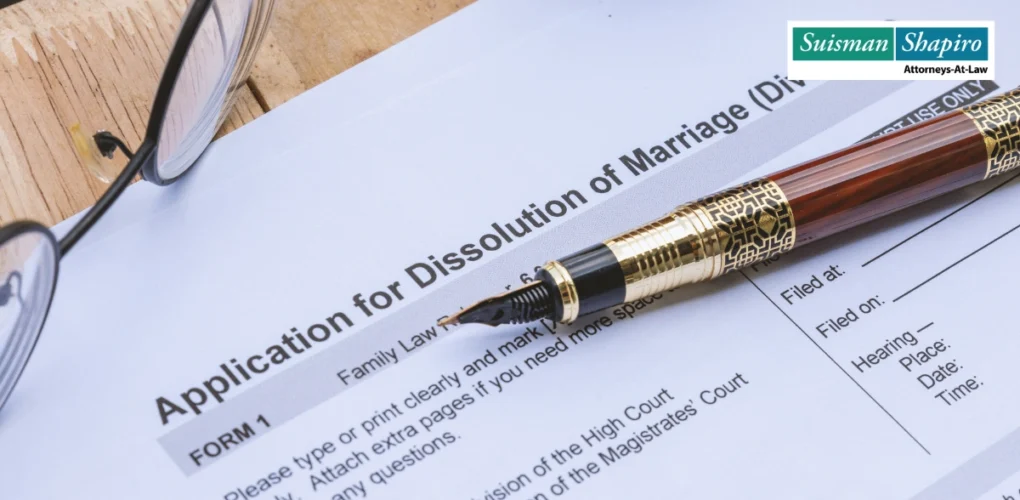
What is an uncontested divorce in Connecticut? Spouses are said to have an uncontested divorce if they reach an agreement on all of the issues that must be resolved before their marriage can be ended. In other words, they present their agreement for court review rather than asking a judge to decide disputed matters for them. Familiarity with the difference between these two processes may help couples identify which one might be applicable to them.
An uncontested divorce generally means that spouses agree on all of the major issues involved in ending their marriage. Depending on the circumstances, those issues may include:
The couple usually puts their agreement down in writing via a settlement document sent to the court. Once the court gives its approval and finalizes the dissolution, the agreement becomes a component of the divorce judgment.
It does not necessarily mean that the spouses agree on every last detail of their personal lives. What this means is that they’ve come to a mutual understanding on all the points the court requires to bring the divorce to a close.
Connecticut has a divorce rate of 2.6 per 1,000 people, according to the Centers for Disease Control and Prevention. In Connecticut, 12% of females and 9% of males are divorced, according to another statistic, with some of them benefiting from an uncontested divorce.
Connecticut offers a simplified non-adversarial divorce process for those who meet the eligibility requirements. The Connecticut Judicial Branch provides a self-help form and instructions that allow couples to apply for a divorce using a joint petition, without needing to appear in court, with the judge making a decision based on the submitted documents. If a couple qualifies, they can get a divorce in 35 days or less.
Non-adversarial divorce laws are more restrictive than couples simply agreeing to divorce. In addition to other requirements, spouses must have:
Couples that do not meet those requirements may be able to use other expedited procedures if they agree on the issues, but they cannot use the non-adversarial process just because the divorce is uncontested.
An uncontested divorce may require less court involvement because the spouses have resolved the issues and no longer have the disagreements they would otherwise have to litigate. The spouses may also gain greater control over the terms of the divorce by reaching an agreement, rather than leaving all disputed issues up to the judge.
The uncontested process also may not require as many contested hearings as a divorce with unresolved financial or parenting disputes. However, uncontested is not the same as automatic. Even in Connecticut’s streamlined divorce, couples must still adhere to the state’s filing procedures and supply all necessary information for inclusion in the final decree.
When you hire a Connecticut divorce lawyer, they can review a proposed settlement and identify any provisions that may cause financial or legal issues in the future. Additionally, your Connecticut divorce attorney is able to draft or examine the necessary court paperwork, financial disclosures, and agreed-upon settlements prior to submission.
An attorney might uncover issues with retirement plans, tax fallout, debt division, property transfers, or support arrangements that aren’t clear from the agreement, even when spouses agree on the core matters. If a disagreement occurs during what was otherwise an uncontested divorce case, an attorney can also work with the other spouse’s lawyer and address the disputed issue through the court process.
Family law is one of the areas in which Suisman Shapiro’s attorneys have developed specific experience as the firm has grown beyond the general practice model that existed when the firm began several decades ago. The Connecticut family lawyers at Suisman Shapiro Attorneys-at-Law handle divorce, custody, property division, and related matters for individuals throughout eastern Connecticut.
The firm’s New London office is located near downtown New London and the Thames River, giving residents of communities such as Groton, Waterford, East Lyme, and Stonington access to family law services within the region.
An uncontested divorce may not be approved by a judge if the paperwork is not properly filled out or if the parties do not qualify for an uncontested divorce. An uncontested divorce may also be denied if the terms are not fair and equitable. In Connecticut, the court in a non-adversarial divorce must find that the statutory conditions are met and that any submitted settlement agreement is fair and equitable.
The time required varies, depending on the divorce procedure and whether the spouses meet all requirements. The non-adversarial divorce process in Connecticut, designed for couples who meet eligibility requirements, can result in a divorce in 35 days or less. Uncontested divorces using other procedures may take longer because they have different filing requirements.
Yes. If the spouses later disagree about an unresolved issue or one spouse withdraws consent to the proposed agreement, a divorce that was uncontested can become contested. Until the divorce is final, changing circumstances can affect the status of the case. Contested issues can regard alimony, child support, child custody, and other obligations.
Yes, you can get an uncontested divorce if you have children. The fact that spouses have children does not automatically prevent them from getting an uncontested divorce in Connecticut. They do need to reach agreements addressing applicable parenting issues. Connecticut’s non-adversarial divorce procedure is more limited and requires no children born to or adopted by the spouses, so families with children may need to use another procedure.
If you are going through a divorce, an attorney at Suisman Shapiro Attorneys-at-Law can help you in the legal process so you can focus on your family. Contact us today to learn how we can protect your interests.

© 2026 Suisman Shapiro Attorneys-at-Law. All rights reserved.
Digital Marketing By: 
*Images are obtained under license from Canva and other third-party stock image providers, with attribution included where required.