
Fields marked with an * are required
"*" indicates required fields
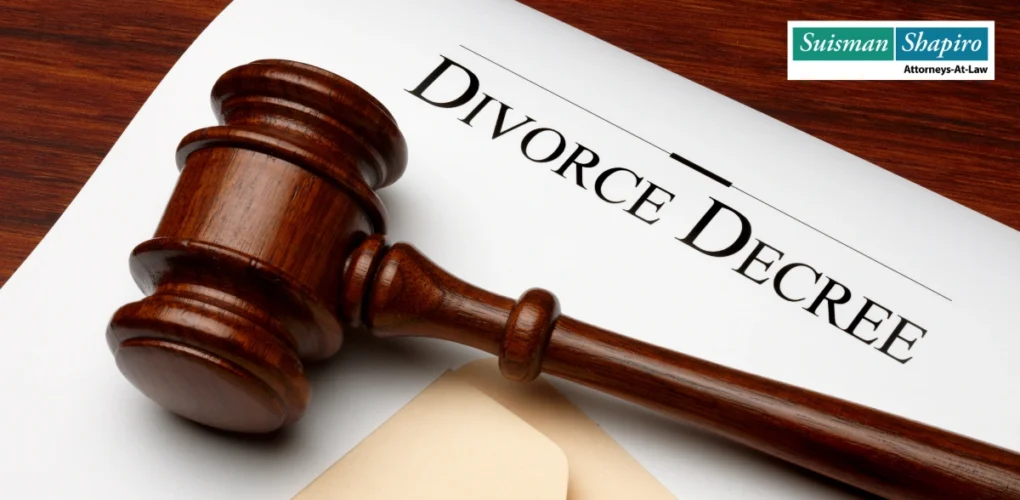
When you get a divorce in Connecticut, you may need different documents depending on whether the case is contested, whether the spouses have minor children, and whether the parties are asking the court to issue orders regarding other matters in addition to the divorce. Knowing what divorce papers you need in Connecticut can help you prepare for a smoother divorce.
Connecticut divorce papers typically include the forms used to open the case, to provide notice to the other spouse, and to present financial information and the agreement or requests for court orders that must be reviewed or decided by the court.
Suisman Shapiro Attorneys-at-Law has represented families and individuals in eastern Connecticut for over eight decades. It began with the work of Charles Suisman, Max Shapiro, and Louis Wool and has grown to become the largest law firm headquartered in eastern Connecticut. Suisman Shapiro’s Connecticut family law attorneys practice family law, assisting you with your needs.
The New London office of Suisman Shapiro Attorneys-at-Law serves clients in New London, Windham, and Middlesex counties. We also work in personal injury, workers’ compensation, criminal defense, business law, estate planning, and municipal law.
Connecticut is no stranger to divorce. The Centers for Disease Control and Prevention reported that the divorce rate in Connecticut is 2.6 per 1,000 residents. One source showed that, in the state, 9% of men and 12% of women are divorced. These individuals must submit all paperwork in order for a divorce to be legally finalized.
A traditional Connecticut divorce usually starts with several documents filed in court. The JD-FM-159, also known as the Complaint/Cross Complaint for Dissolution of Marriage, informs the court that one partner wishes to end the marriage and includes the essential details required to initiate the legal proceedings.
The Summons Family Law Actions (JD-FM-3) notifies the other spouse that a legal action has been filed and provides information about how to respond to the divorce case. The filing also includes a Notice of Automatic Court Orders (JD-FM-158). These orders place restrictions on certain financial and parenting actions that the spouses may take while the divorce is pending.
Divorces with minor children also may require additional paperwork providing information about the children.
Financial affidavits play an important role when the divorce involves financial issues. Often, both spouses are required to disclose details regarding their earnings, spending, possessions, and debts. This financial affidavit gives the court the details it needs to make decisions about things like spousal support, child support, and how assets may be divided.
To support the affidavit’s financial claims, you could provide documents such as pay stubs, tax returns, bank statements, retirement account details, loan histories, and other records detailing the family’s financial standing.
Divorces with minor children generally require additional documentation. Connecticut uses an Affidavit Concerning Children (JD-FM-164) to present information about the children involved in the case.
Parents may also need to complete paperwork related to custody and parenting arrangements. Connecticut typically requires parents involved in a divorce or custody proceeding to attend a court-approved parenting education program. If parents can’t agree on custody, visitation schedules, moving away, or other child-related issues, extra paperwork might be required.
When you hire a divorce lawyer, they can identify the correct Connecticut court forms for your case, handle the preparation or review of documents, and sort out any errors or procedural issues. A Connecticut divorce attorney can look over financial statements and draft settlement agreements for any discrepancies that could impact how property is split or affect decisions on spousal support, child support, or other court orders.
When your divorce includes complicated assets, disputed financial records, minor children, or disagreements on the settlement’s proposed conditions, legal guidance becomes especially valuable.
Suisman Shapiro’s family law attorneys handle divorce matters from negotiated agreements to complex contested cases. Because the firm includes attorneys who concentrate in several areas of law, the family law team can address divorce-related issues that may be affected by financial matters. An attorney can also explain Connecticut divorce laws to you in a way that you understand.
The firm’s attorneys represent clients throughout eastern Connecticut, including New London, Norwich, Groton, Waterford, East Lyme, Stonington, Old Saybrook, and surrounding communities.
The Connecticut Judicial Branch offers self-represented parties the ability to access electronic services for certain filings and case-related functions. The availability of electronic filing for a particular document or procedure depends on the type of filing and the circumstances of the case, and some functions may require additional steps outside of the electronic system.
If you plan to file divorce documents online, be sure to confirm that the applicable current filing requirements apply to your situation.
If you make an error on a divorce document that you have filed with the court, you may not need to start the process all over again. Depending on the type of error and the stage of the proceeding, you might be able to file a corrected or amended form of the document. A court order or additional notice to the other spouse may be required in some cases.
Keep copies of your divorce judgment and any important supporting documents for as long as you have them. You may need the final divorce judgment in the future to prove your marital status, property or support orders, custody arrangements, or to resolve a later legal issue. Records detailing financial dealings or settlement terms are also valuable after a divorce.
In some situations, another person may be able to assist with preparation of divorce documents. The requirements for signing and filing a particular form depend on the type of form and how it may be submitted. An attorney can prepare and file divorce documents on behalf of a client. However, some forms must be signed or verified by the party filing them.
If you are going through a divorce, Suisman Shapiro Attorneys-at-Law can help you file the necessary paperwork. Contact our offices today to get started.

© 2026 Suisman Shapiro Attorneys-at-Law. All rights reserved.
Digital Marketing By: 
*Images are obtained under license from Canva and other third-party stock image providers, with attribution included where required.